Approximately 25% of people worldwide have anemia. Anemia occurs when you have a decreased level of hemoglobin in your red blood cells (RBCs). Hemoglobin is the protein in your RBCs that is responsible for carrying oxygen to your tissues.
Iron deficiency anemia is the most common type of anemia, and it occurs when your body doesn’t have enough of the mineral iron. Your body needs iron to make hemoglobin. When there isn’t enough iron in your blood stream, the rest of your body can’t get the amount of oxygen it needs. In women of childbearing age, the most common cause of iron deficiency anemia is a loss of iron in the blood due to heavy menstruation or pregnancy. A poor diet or certain intestinal diseases that affect how the body absorbs iron can also cause iron deficiency anemia.
Several causes of iron deficiency vary based on age, gender, and socioeconomic status. Iron deficiency may result from insufficient iron intake, decreased absorption, or blood loss. Iron-deficiency anemia is most often from blood loss, especially in older patients. It may also be seen with low dietary intake, increased systemic requirements for iron such as in pregnancy, and decreased iron absorption such as in celiac disease. In neonates, breastfeeding is protective against iron deficiency due to higher bioavailability of iron in breast milk compared to cow’s milk. In developing countries, a parasitic infestation is also a significant cause of iron-deficiency anemia.

Iron deficiency anemia occurs when your body doesn’t have enough iron to produce hemoglobin. Hemoglobin is the part of red blood cells that gives blood its red color and enables the red blood cells to carry oxygenated blood throughout your body. Iron is essential for the production of hemoglobin.
There are many reasons why a person might become deficient in iron. These include:
• Inadequate iron intake
Your body regularly gets iron from the foods you eat. Eating too little iron over an extended amount of time can cause a shortage in your body. Foods such as meat, eggs, and some green leafy vegetables are high in iron. Because iron is essential during times of rapid growth and development, pregnant women and young children may need even more iron-rich foods in their diet.
• Pregnancy or blood loss due to menstruation
Heavy menstrual bleeding and blood loss during childbirth are the most common causes of iron deficiency anemia in women of childbearing age. Without iron supplementation, iron deficiency anemia occurs in many pregnant women because their iron stores need to serve their own increased blood volume as well as be a source of hemoglobin for the growing fetus.
• Blood Loss / Internal bleeding
Blood contains iron within red blood cells. So if you lose blood, you lose some iron. Women with heavy periods are at risk of iron deficiency anemia because they lose blood during menstruation. Slow, chronic blood loss within the body – such as from a peptic ulcer, a hiatal hernia, a colon polyp or colorectal cancer – can cause iron deficiency anemia. Gastrointestinal bleeding can result from regular use of some over-the-counter pain relievers, especially aspirin.
• Inability to absorb iron
Iron from food is absorbed into your bloodstream in your small intestine. An intestinal disorder, such as celiac disease, which affects your intestine’s ability to absorb nutrients from digested food, can lead to iron deficiency anemia. If part of your small intestine has been bypassed or removed surgically, that may affect your ability to absorb iron and other nutrients.
• Endometriosis
If woman has endometriosis she may have heavy blood loss that she cannot see because it is hidden in the abdominal or pelvic area.
Anemia is a common condition and can occur in both men and women of any age and from any ethnic group. Some people may be greater risk of iron deficiency anemia than others, including:
• Women / Pregnant Women
Because women lose blood during menstruation, women in general are at greater risk of iron deficiency anemia.
During pregnancy, iron deficiency is associated with multiple adverse outcomes for both mother and infant, including an increased risk of haemorrhage, sepsis, maternal mortality, perinatal mortality, and low birth weight.
• Infants and Children
Infants, especially those who were low birth weight or born prematurely, who don’t get enough iron from breast milk or formula may be at risk of iron deficiency. Children need extra iron during growth spurts.
• Vegetarians
People who don’t eat meat may have a greater risk of iron deficiency anemia if they don’t eat other iron-rich foods.
• Frequent Blood Donors
People who routinely donate blood may have an increased risk of iron deficiency anemia since blood donation can deplete iron stores. Low hemoglobin related to blood donation may be a temporary problem remedied by eating more iron-rich foods.
Signs and Symptoms of Iron Deficiency Anemia
Iron deficiency can result in symptoms that can affect your quality of life. These include shortness of breath, tiredness, and reduced concentration. Sign and symptoms of iron deficiency vary depending on the severity of the anemia, age, and current state of health. In some cases, people experience no symptoms. Signs and symptoms of iron deficiency are:
1. Unusual tiredness
Fatigue is one of the most common symptoms of iron deficiency. This fatigue happens because your body lacks the iron it needs to make a protein called hemoglobin, which helps carry oxygen around the body. Without enough hemoglobin, less oxygen reaches your tissues and muscles, your heart also has to work hader to move more oxygen-rich blood around your body, which make you tired.
2. Paleness
Pale skin or pale coloring of the inside of the lower eyelids are other common signs of iron deficiency. The hemoglobin in red blood cells gives blood its red color, so low levels during iron deficiency make the blood less red.
3. Shorness of breath
When hemoglobin levels are low during iron deficiency, oxygen levels will also be low. As a result, your breathing rate will increase as your body tries to get more oxygen.
4. Headaches and dizziness
Headaches may occur because low levels of hemoglobin in red cells mean that not enough oxygen reaches the brain. As a result, blood vessels in the brain may swell, causing pressure headaches.
5. Heart palpitations
Noticeable heartbeats, also known as heart palpitations, can be other symptoms of iron deficiency anemia. In cases of iron deficiency, the heart has to work extra hard to transport oxygen around the body. This can lead to irregular or fast heartbeats and even heard murmurs, an enlarged heart, or heart failure.
6. Dry and damaged hair and skin
Dry and damaged skin and hair can be signs of iron deficiency because skin and hair receive less oxygen from the blood. In more severe cases, this may lead to hair loss.
7. Swelling and soreness of the tongue and mouth
Signs include when your tongue becomes swollen, inflamed, pale, or strangely smooth. Iron deficiency may also cause other symptoms around your mouth. These include: dry mouth, a burning feeling in your mouth, sore red cracks at the corners of your mouth, mouth ulcers.
Prevention of Iron Deficiency Anemia
The main of treatment is to restore hemoglobin levels to normal and replenish iron stores. You can reduce the risk of iron deficiency anemia by:
• Eat iron-rich food
Food rich in iron include:
Red meat, such as beef
Dark green leavy vegetables, such as spinach and kale
Dried fruit, such as raisins and apricots
Peas, beans, and other pulses
Seafood
Iron fortified foods
Seeds and nuts
• Help boost the iron absorption
You can enhance your body’s absorption of iron by drinking citrus juice or eating other foods rich in vitamin C at the same time that you eat high-iron foods. Eating vitamin C will help your body absorb iron better. It may also help to avoid certain foods that, when eaten in large amounts can keep your body from absorbing iron. These include tea, coffee, and foods high in calcium such as dairy products and calcium-fortified whole grain cereals.
• Take iron supplement
You should only take an iron supplement if your healthcare provider confirms that you’re iron deficient or are at risk for iron deficiency and can’t meet your needs through diet alone.
Keep in mind that taking iron supplements may cause some side effects. Fe2+ supplements like Ferrous sulphate have a good bioavailability, but they have a bad taste (metallic taste), bad organoleptic stabilization and cause frequent problems with gastrointestinal discomfort, bloating, and constipation. While Fe3+ supplements like Ferric hydroxide polymaltose complex has a good organoleptic stabilization, do not have metallic taste and do not cause problem with gastrointestinal, but they have poor oral bioavailability. However, these side effects can be minimized by taking specific types of iron supplements that may minimize negative effects with good taste and good bioavailability such as LIPOFER®.
LIPOFER® is water dispersible micronized source of iron that has been microencapsulated to enhance iron absorption and to reduce undesirable organoleptic attributes, thus enabling the enrichment of various types of foods and dietary supplements with this essential nutrient. Total iron absorption is higher with LIPOFER®, showing that LIPOFER® is more bioavailable than other iron sources. The benefits of LIPOFER® are reduced metallic taste, controlled interactions with other components, highly bioavailable iron, and no digestive tract irritation.
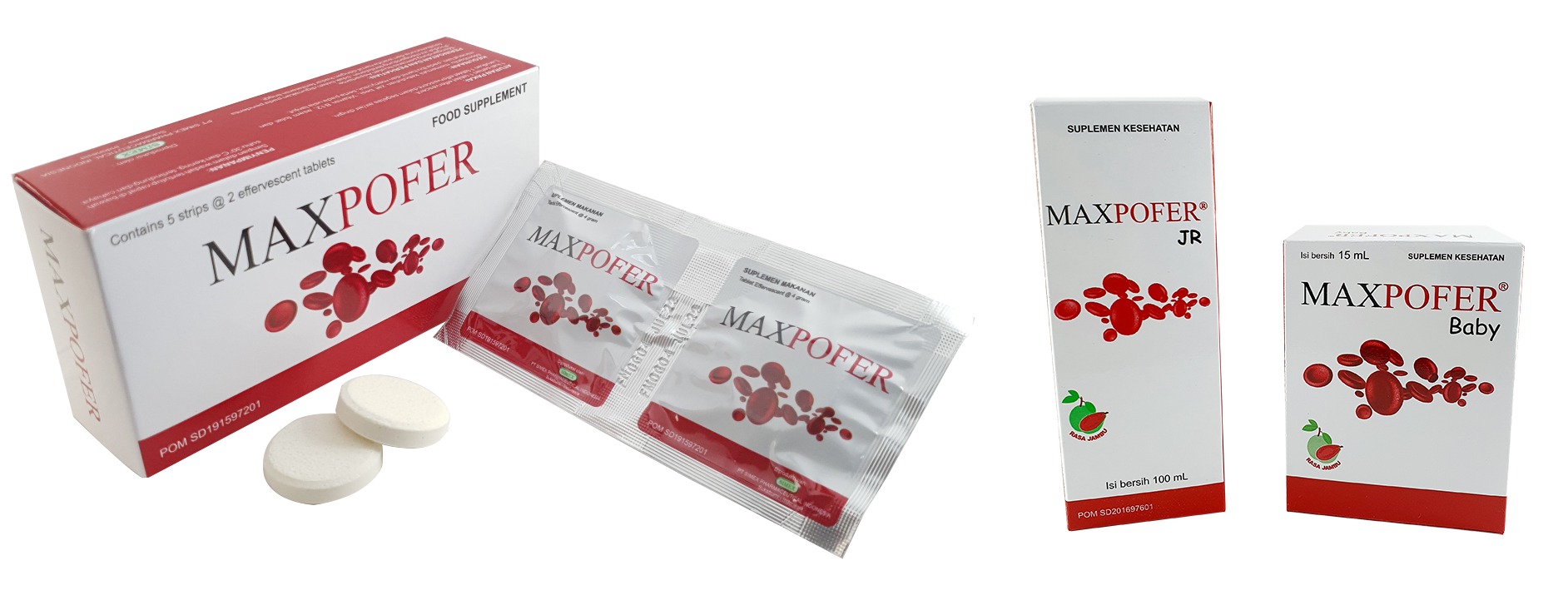
PT. SIMEX PHARMACEUTICAL INDONESIA as one of the pharmaceutical companies in Indonesia presents MAXPOFER products as an iron supplement. There are three different dosage forms, MAXPOFER Effervescent Tablet is for adult and pregnant women with fresh taste lemon flavor, MAXPOFER JR is for kids, and MAXPOFER BABY is for babies or toddlers with guava flavor. MAXPOFER as an iron supplement is using LIPOFER®, and LIPOFER® has advantages over common iron supplement because highly bioavailable in the blood.
Reference: